
Digital signage transformation at the University of Turin
The prestigious Italian University of Turin (Università degli Studi di Torino or UNITO) launched an ambitious “Iscreen” digital signage project to modernize communication across its campuses.
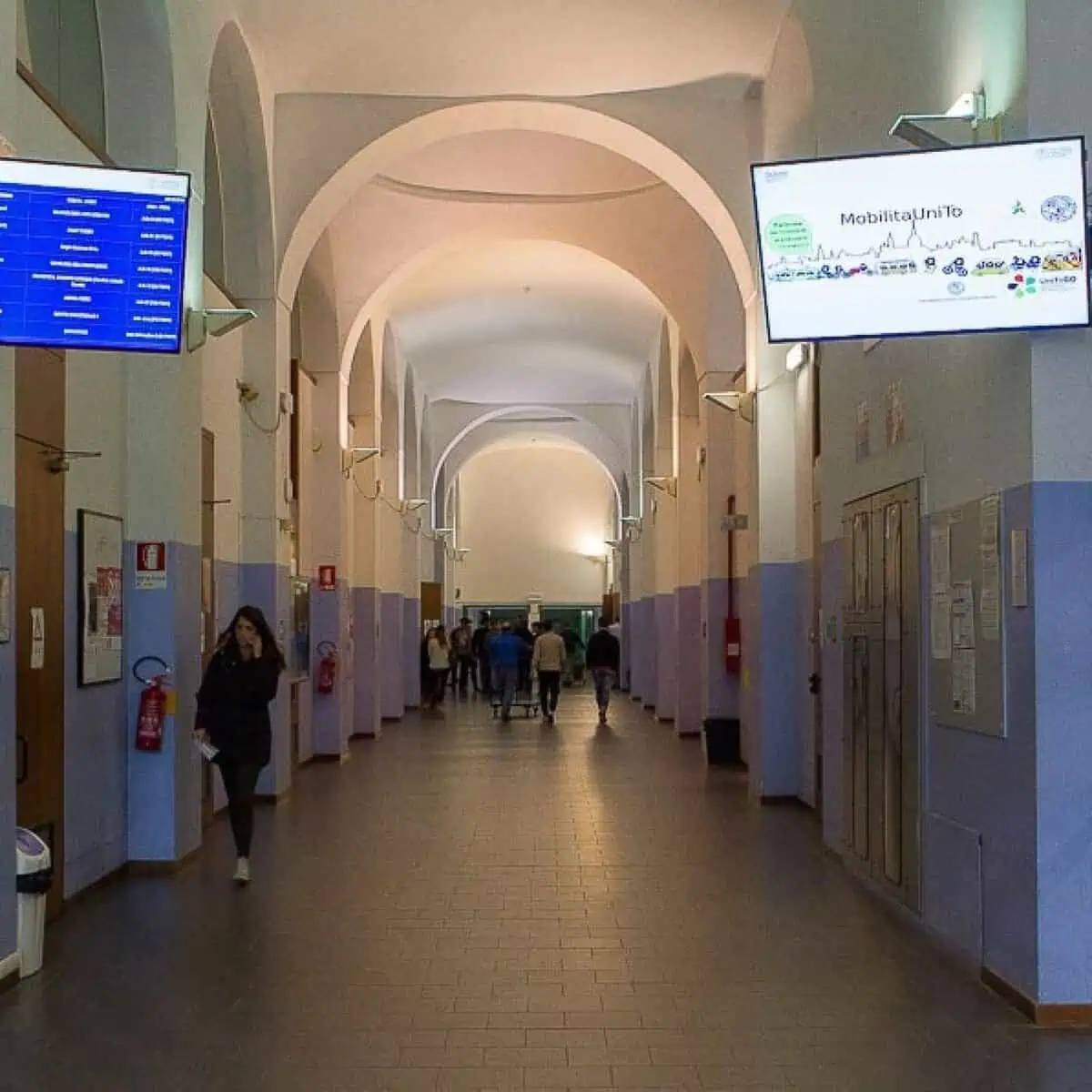
The platform has enabled us to simplify what would otherwise have been a complex project, given the scale of our network. Its compatibility with our existing hardware, ease of use, and ability to centralise and scale content have significantly improved how we communicate across the University. It has helped bring together students and lecturers from different faculties, creating a more unified campus experience.
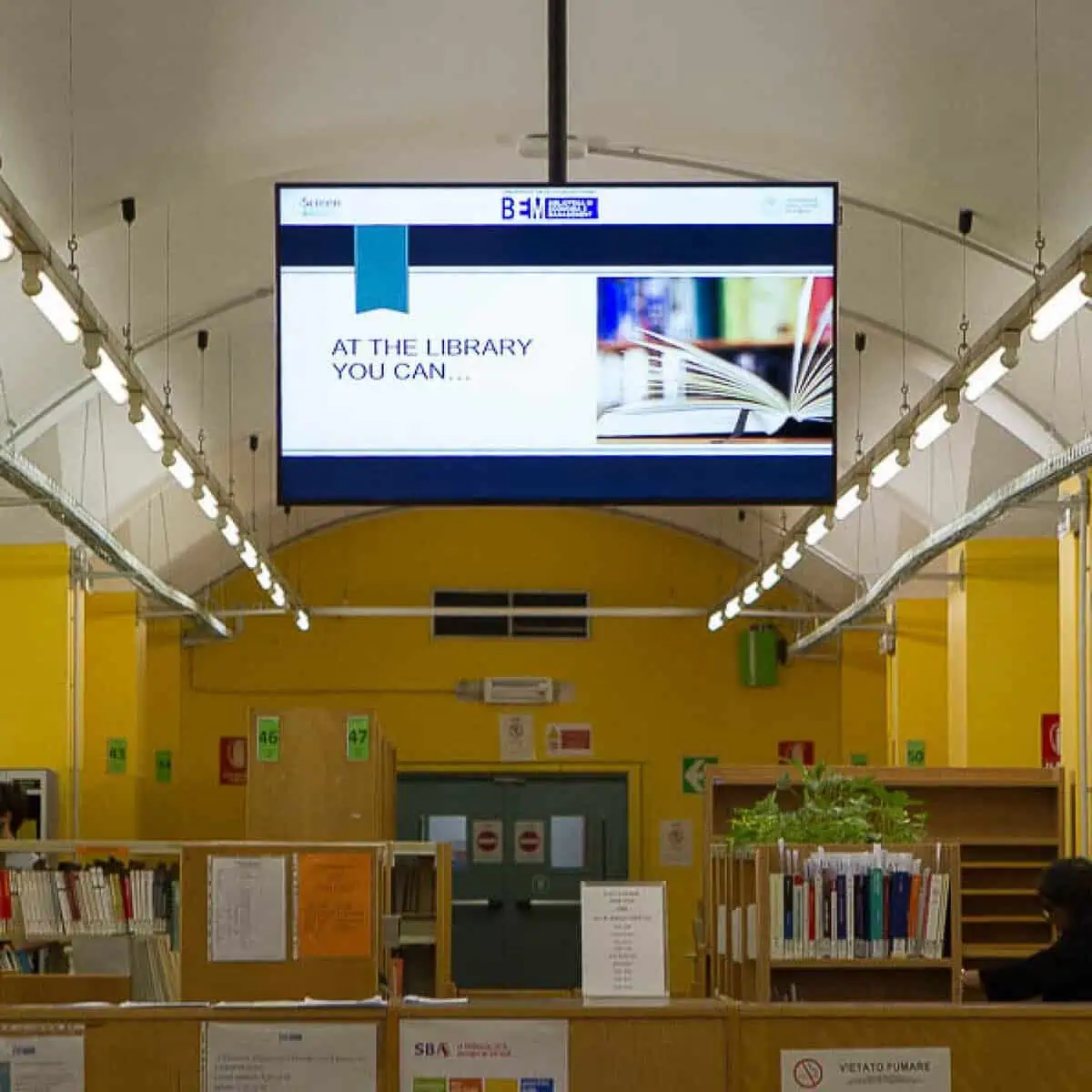
To support this initiative, the University deployed a network of 71 AOpen Chromebox Mini players. The goal was to centralize communications, improve learning outcomes, and create a more inclusive and engaging campus environment.
Ranked among the top five universities in Italy, the University of Turin is often described as a “city within a city”, with 120 buildings spread across the Piedmont region.
The scale of this centuries-old institution created significant communication challenges, making digitalization essential.
A communication challenge across a large university campus
With faculties operating independently and information often distributed across multiple channels, ensuring that students and staff received timely, relevant updates had become increasingly complex.
Connecting 26 sites through a centralized communication system
To address these challenges, the University implemented a campus-wide network that connects faculties and departments across 26 sites.
From fragmented communication to a unified platform
This network enabled the transition from fragmented communication methods to a centralized system capable of delivering both university-wide announcements and highly targeted, location-specific messaging.
Faculties and departments, previously separated by distance and disconnected systems, are now brought together through a single, integrated communication platform.
Delivering real-time academic information where it matters
A key priority was improving access to essential academic information for students.
Real-time schedules and timetables on display
By integrating the University Planner (UP) application, real-time exam schedules and lecture timetables are now displayed directly on screens within each faculty.
This ensures that students can access up-to-date information exactly where they need it, reducing reliance on multiple platforms and improving day-to-day navigation across campus.
Enhancing student engagement and campus life
Beyond academic communication, the network has become a central part of campus life.
1. A multimedia hub for news and events
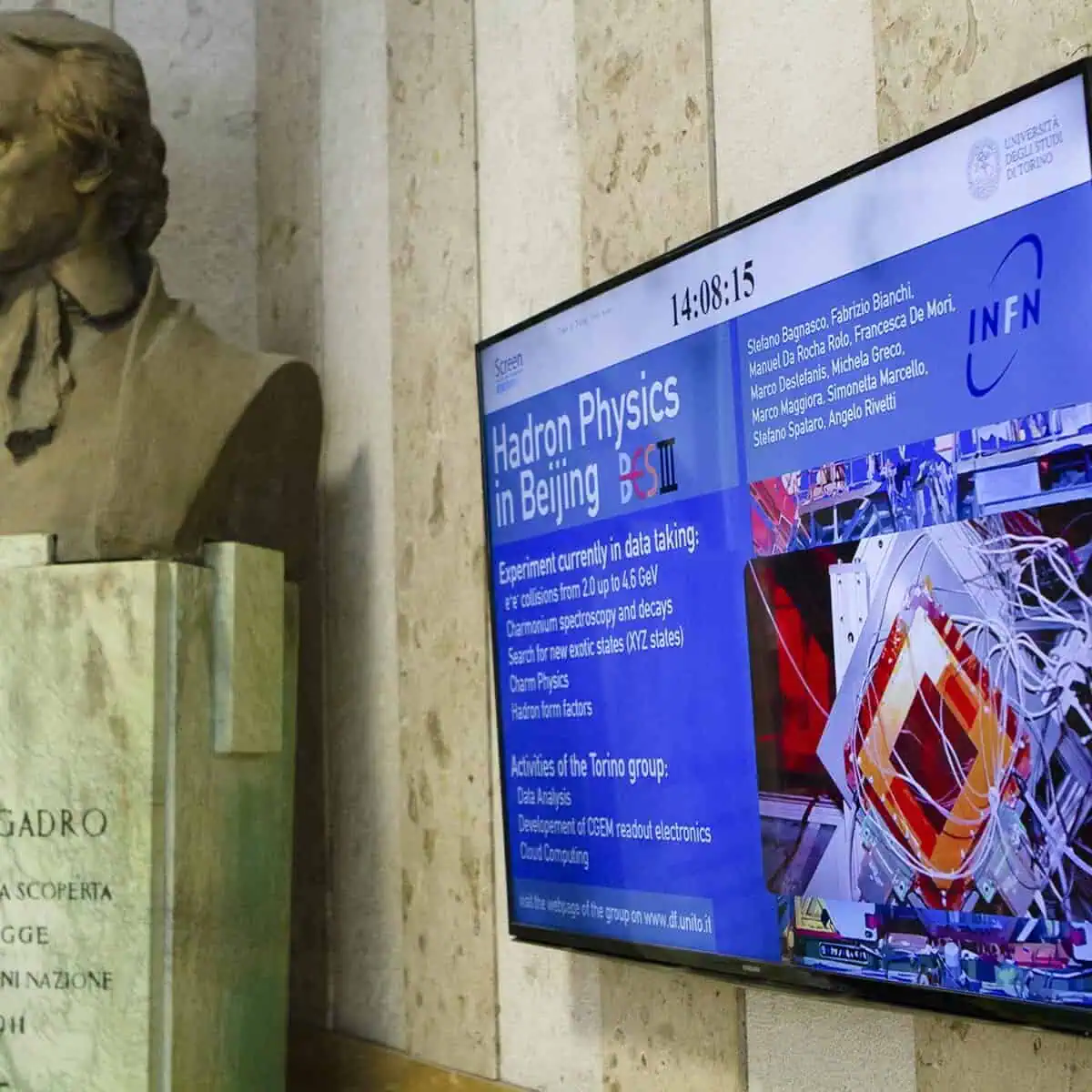
Screens across the University now serve as dynamic communication hubs, showcasing news, initiatives, and upcoming events. This helps foster a stronger sense of community by keeping students and staff connected across all campuses.
2. Bringing social media into the physical environment
Curated social media content is also displayed alongside announcements using dynamic, multi-zone layouts, increasing visibility and encouraging greater engagement with the University’s digital channels.
Streamlining content management across faculties
The system has also significantly improved operational efficiency.
1. Centralized content workflows
Communications from editorial teams and faculty offices are now managed through a centralized platform, simplifying content creation, scheduling, and distribution.
2. Consistent messaging with local flexibility
While ensuring consistency across the University, faculties can still tailor messaging to their specific audiences, balancing central control with local relevance.
Scalable and reliable infrastructure
The solution supports long-term growth and performance.
1. Built for scalability
The network can easily expand to include additional screens, locations, or new content types as needs evolve.
2. Reliable performance and monitoring
Supporting a wide range of content formats—including video, web pages, images, and live data feeds—the system ensures high-quality playback across the network. Optimised for ChromeOS devices, it delivers consistent performance and reliability, while remote monitoring tools provide full visibility and control.
Results: a more connected and efficient campus
As a result, the University of Turin has transformed its communication strategy, improving access to information, increasing engagement, and creating a more connected and cohesive campus experience.
À propos de Navori Labs
Founded in 1998, Navori Labs is a Swiss innovator and global leader in digital signage software and AI-driven marketing analytics. Backed by a team of highly qualified engineers, Navori Labs develops professional-grade software designed for scalable deployment, optimizing business communication across industries. Navori Labs is SOC 2 Type I & Type II certified, ensuring the highest security and reliability standards.

