
How Digital Signage Analytics Can Improve ROI
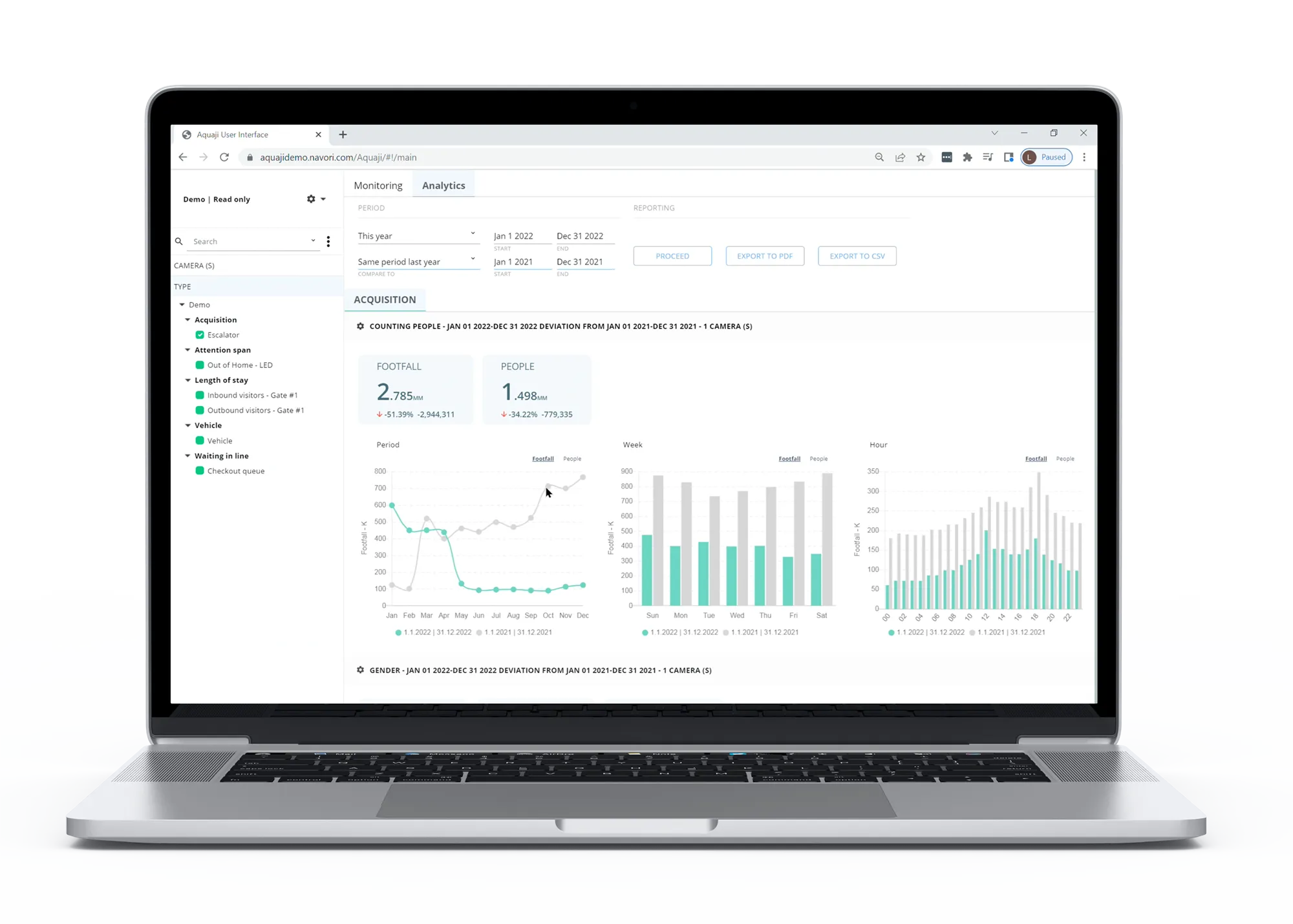
In the increasingly competitive retail environment, simply installing screens and running loops of content is no longer enough. To generate meaningful value from your investment in digital signage, you need to go beyond “we have screens playing ads” and into data‑driven performance. In other words: analytics. When you apply digital signage analytics to your network, you unlock the ability to measure, optimise and prove the return on investment (ROI) of your signage network—especially in retail. In this article we’ll explore how analytics for digital signage, especially in the cloud era, drives measurable results; how to measure the ROI of digital signage investment; how retail deployments benefit; and how a platform like Navori’s cloud‑digital‑signage tools with best analytics features 2025 can help you build a roadmap to measurable success.
Why digital signage analytics matter
Think of digital signage as the physical world counterpart to a website: you wouldn’t deploy a website and never measure its visits, behaviour, or conversion. Yet many signage deployments live in “set‑and‑forget” mode. Analytics changes this.
Key benefits of digital signage analytics:
-
It provides visibility into how many people are seeing your screens (impressions, dwell time, attention) rather than guessing.
-
It helps you understand which content works, which doesn’t, and when you should switch it out.
-
It allows you to measure impact on business goals (e.g., sales lift, conversion) rather than just “content played.”
-
It enables optimisation: you can A/B test, iterate, and continuously improve your signage ROI.
-
It supports accountability: you’ll be able to answer the executive question, “What did we get for this signage investment?”
In the retail context, where every square metre and every screen costs money, using digital signage analytics for retail becomes essential. You want to know not only that customers saw the display, but that they responded — walked into a zone, selected a product, or redeemed an offer.
The link between analytics and ROI
If analytics are the engine, ROI measurement is the destination. Let’s unpack how deploying analytics leads to a demonstrable digital signage ROI.
Analytics → Insight
With a signage analytics system, you’ll capture metrics such as: impressions (foot‑traffic near the screen), dwell time (how long people watch), engagement (touches, QR scans), conversion triggers (coupon redemptions, POS lifts) and operational health (uptime, playback verification).
Insight → Optimisation
Once you have this data, you can optimise: swap out underperforming content, reposition displays, change dayparts, tailor messages to demographics. Over time you refine until your signage network is aligned with your audience behavior.
Optimisation → ROI
As engagement improves, conversions rise or cost savings occur (for example reduced print cost, faster content updates), you begin to capture real business value. This is what drives your retail digital signage ROI. Analytics make it visible, repeatable, and scalable.

How to measure ROI of digital signage investment
Measuring the return on your digital signage deployment requires a structured approach. Here is a step‑by‑step guide.
1. Define objectives and KPIs
First, align your digital signage goals with business goals. For retail that might include: increasing average spend, boosting footfall in promotional areas, reducing print advertising cost, shortening perceived waiting time. Analytics should map to these.
Choose KPIs in three tiers (adapted from industry frameworks):
-
Operational efficiency: screen uptime, content playback accuracy, cost reduction (e.g., less printed signage)
-
Engagement: impressions, dwell time, interaction rate
-
Business impact: sales uplift, conversion rate, coupon redemption, improved customer satisfaction
2. Gather cost data
List all relevant costs: hardware (displays, media players), software licensing (CMS, analytics modules), installation, content production, ongoing operations and maintenance. Some costs may be amortised over several years.
3. Quantify benefits
Using the analytics tool, collect data on how signage impacted your KPIs. Examples:
-
Sales uplift attributable to content played on screens (e.g., product zone saw +20%)
-
Print cost savings (e.g., less paper signage, fewer staff time updates)
-
Increased engagement (e.g., dwell time rose by 15 %)
-
Operational efficiencies (e.g., remote updates saved X hours)
You may also capture softer benefits (brand awareness, improved perception), though these are harder to quantify.
4. Calculate ROI via formula
A widely‑used formula:
For example: costs = €12,000 (hardware + software + content + labour) and benefits = €17,600 (sales uplift + savings) → ROI ≈ 46.7 %
5. Conduct sensitivity and ongoing monitoring
Because many variables (footfall, seasonality, campaign mix) affect results, perform sensitivity analyses: what if sales uplift is 10 % vs 20 %? Use analytics dashboards to monitor performance, iterate and refine.
6. Tie analytics to systems
For higher precision, integrate signage analytics with other systems (POS, CRM, inventory, web analytics). That way you can correlate signage-driven traffic to actual sales or behavior.
Why cloud digital signage tools with best analytics features 2025 matter
In the modern era, signage networks are moving into the cloud. Cloud‑based digital signage solutions bring scalability, remote management, and often richer analytics. When selecting a system, look for these analytics features:
-
Real‑time dashboards and reporting (impressions, dwell, conversions)
-
Audience measurement (demographics, traffic heatmaps)
-
Content performance tracking (play count, runtime, results of A/B tests)
-
Integration with other datasets (POS, CRM, web)
-
Cost‑savings reporting (print elimination, labour reduction)
-
Multi‑site roll‑out analytics with benchmarking
Recent sources emphasise that cloud digital signage analytics make linking screens to business outcomes easier.
Selecting a solution positioned among the “cloud digital signage tools with best analytics features 2025” means you’re future‑proofing your signage network: analytics become built in rather than an afterthought.

Retail focus: how digital signage analytics for retail drives ROI
Retail is a goldmine for digital signage analytics because you have physical stores, footfall traffic, product zones and measurable sales outcomes. Let’s explore how.
Footfall and dwell time
Retail signage analytics can capture how many people walk near the display (footfall) and how long they engage with it (dwell time). These metrics help you understand placement effectiveness and content appeal.
Zone‑based promotions
Say you deploy signage in a retail store near a product zone. With analytics you can run a promo and track: Did dwell time increase in that zone? Did sales of promoted items rise? This gives you a direct line from screen → behaviour → sale.
A/B testing in retail
Analytics allow you to run different content versions (version A vs version B) on parallel screens, measure which one drives higher dwell, higher conversions, and roll out the winner. This iterative method is key to retail signage ROI.
Print substitution and cost savings
In retail, signage has traditionally been physical posters, shelf talkers, printed flyers. Digital signage with analytics lets you measure how much print cost you avoided, and that becomes part of your ROI calculation.
Cross‑channel integration
Retail signage analytics become even more powerful when integrated with POS/CRM. For example: a display promotes a QR code, a customer scans and redeems at checkout → you track that as a conversion. This tight loop makes ROI tangible.
Case‑in‑point
A recently published case study by meldCX and ASUS deployed vision analytics on hundreds of retail screens and realized an ROI uplift of up to 3.5x in some stores. AVIXA Xchange
Best‑practice checklist: maximise your signage analytics and ROI
Here’s a checklist you can use to ensure your signage network delivers measurable value:
-
Set clear objectives: What business outcome do you target (sales uplift, cost savings, brand awareness)?
-
Select appropriate KPIs: Choose engagement, conversion, operational metrics aligned to your objective.
-
Choose analytics‑enabled signage platform: Make sure your solution supports audience metrics, content tracking, integrations.
-
Capture cost baseline: Document current spend (print, labour, lost opportunity) and signage costs.
-
Deploy, measure, optimise: Use analytics dashboards to monitor performance, run A/B tests, iterate content and placement.
-
Integrate cross‑systems: Link signage data with POS, CRM, inventory, web analytics for deeper insight.
-
Calculate ROI: Use the formula (benefits‑costs)/costs ×100. Include direct benefits (sales) and indirect (savings).
-
Report upward: Use dashboards and case evidence to show leadership the value of signage investment.
-
Scale and refine: As you learn what works, expand screens, reuse content that performed well, retire underperforming.
-
Communicate and learn: Share wins, learn from low‑performing zones, refine your strategy continuously.
How Navori enables analytics‑driven digital signage for retail
As you evaluate your platform, here’s how Navori’s cloud‑based approach supports analytics and ROI:
-
Built‑in analytics dashboards that allow you to monitor impressions, content playback, dwell, interactions across your network.
-
Cloud delivery means you can remotely update content, schedule campaigns across stores, and track results centrally.
-
Integration capability: connect to POS/CRM/data feeds for retail analytics.
-
Scalable multi‑site deployment — critical for retail chains with many locations.
-
A/B testing and optimization frameworks that align with analytics best practices.
By choosing a solution like Navori’s, you ensure that your signage network is not just a display medium, but a data‑driven asset that continuously delivers value and return.
Conclusion
In today’s retail landscape, installing digital signage without analytics is like launching a website without Google Analytics — you’ll have presence, but no insight. By embracing digital signage analytics, retailers can shift from guesswork to precision. Analytics provide the data to measure engagement, conversion and efficiency, while optimisations based on those insights drive your digital signage ROI higher and higher.
Whether you’re implementing signage for the first time or looking to scale an existing network, focusing on the metrics, tools, and processes described here will help you build a high‑performing signage programme. With cloud‑based platforms offering robust analytics features in 2025, you’re well placed to leverage the full power of your signage investment.
In short: measure what matters, optimise relentlessly, and prove your value. Let your screens work smarter — not just harder — and your stakeholders will see real, quantifiable impact.
Ready to dive deeper? Let’s explore how your retail network can capture impressions, analyse behaviour and calculate ROI — using Navori’s analytics capabilities. Just ask!

