
The Role of AI in Next-Gen Digital Signage
Artificial intelligence is transforming the digital signage landscape faster than any previous wave of innovation. What began as simple screen-based content playback has evolved into intelligent, interactive, and highly personalized communication. Today, the rise of AI digital signage, AI-powered digital signage, and advanced software capabilities are not only changing how brands manage content but also redefining how audiences experience screens in public spaces.
In 2025 and beyond, AI will be essential for delivering engaging experiences, automating complex workflows, analyzing audience behavior, and optimizing campaigns in real time. This article explores the role of AI in digital signage, the most impactful use cases, and how solutions like Navori incorporate AI to help organizations stay ahead.
How AI Is Transforming Digital Signage
AI’s impact on digital signage can be divided into several major areas, each redefining how screens communicate and how organizations manage their networks. AI enables far deeper personalization, allowing screens to adjust dynamically to demographics, behaviors, and environmental cues. Instead of relying solely on manual scheduling, AI analyzes real-time data and selects messaging that resonates with the audience present at that moment.
Interactivity is also expanding dramatically. Gesture control, voice interfaces, and natural language conversations transform digital signage from a passive display into an active participant in the environment. These interactions help brands build stronger connections with customers while collecting insights that inform marketing decisions.
Predictive analytics are another critical capability. AI can detect foot-traffic trends, identify high-value time windows, and determine which content is likely to perform best. This data-driven approach allows marketing teams to refine their strategies continuously. At the operational level, AI helps monitor hardware health, detect anomalies, and optimize performance—reducing downtime and lowering total cost of ownership.
Whether deployed in retail, transportation, hospitality, corporate communications, or QSR environments, AI is making digital signage more effective and significantly easier to manage.
What Is the Role of AI in Digital Signage?
The primary role of AI in digital signage is to serve as the intelligent engine powering personalization, automation, analytics, and interactivity. By understanding audience behavior and contextual factors like time of day or environmental conditions, AI adapts content in real time. This ensures the right message is displayed at the right moment, improving engagement and campaign effectiveness.
AI also reduces human labor by automating repetitive or complex tasks such as playlist management, content optimization, performance reporting, and troubleshooting. Instead of manually adjusting schedules or analyzing audience data, teams can rely on AI-driven insights and automations to guide decisions.
Another critical role is enhancing customer experiences. AI makes it possible to implement lifelike avatars, interactive assistants, smart kiosks, and responsive displays that feel natural and intuitive. This shift toward immersive interaction increases satisfaction, supports wayfinding, and enables self-service across a wide range of industries.
Ultimately, AI makes digital signage more aware, more responsive, and far more effective—transforming screens into intelligent communication platforms.

AI-Powered Features That Will Define 2025 Digital Signage
AI Avatars Enhancing Customer Engagement
Artificial intelligence is becoming the core driver behind richer, more personalized, and more efficient screen communication. In 2025, innovations such as AI avatars are transforming how brands engage with audiences. These human-like digital assistants can greet customers, share information, and respond to questions in natural language. Their multilingual capabilities make them ideal for global brands and public spaces where visitors speak different languages.
Industries such as retail, transportation, healthcare, and hospitality increasingly rely on AI avatars for service delivery. They offer a consistent, on-brand experience that reduces waiting times, supports staff during peak hours, and enhances overall customer satisfaction.
Generative AI for Real-Time Content Creation
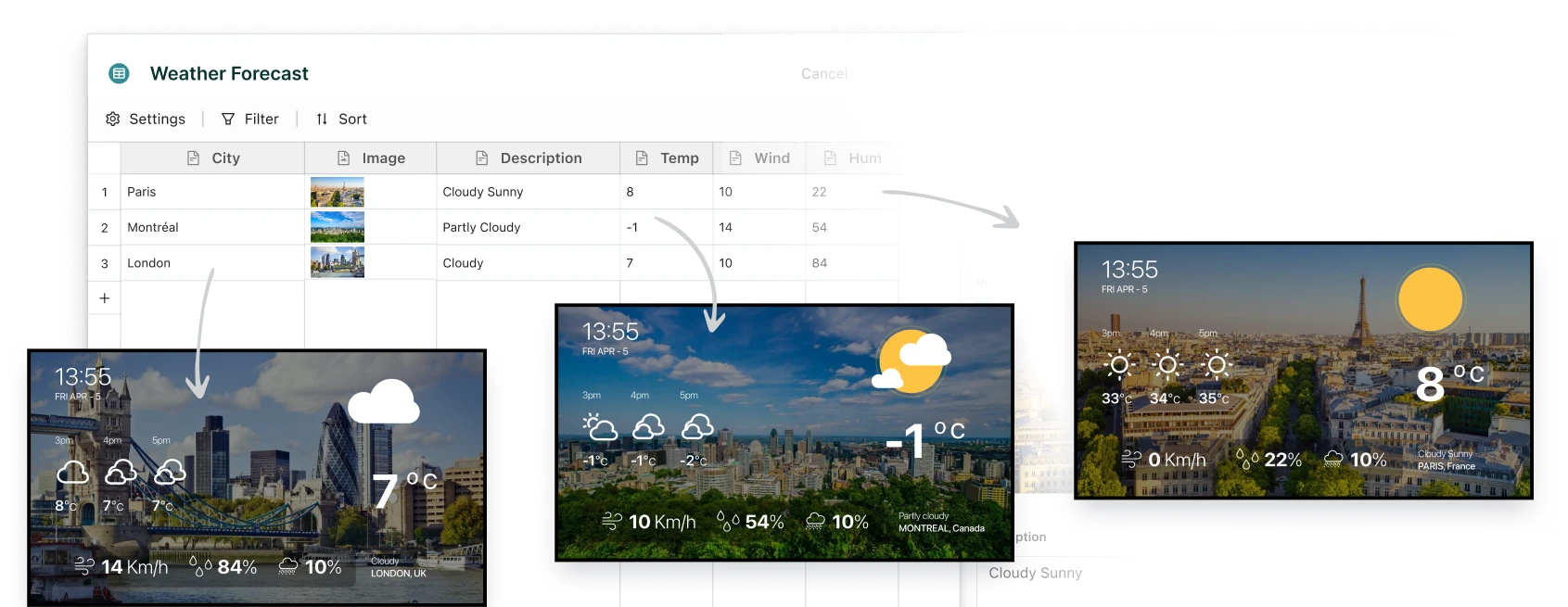
Generative AI is revolutionizing how content is created, enabling real-time visuals and messaging that adapt instantly to data inputs such as weather conditions, local events, inventory changes, or audience profiles. This approach keeps content relevant at all times while dramatically decreasing manual production cycles.
Instead of producing dozens of content variations, marketing teams can rely on AI to generate personalized or contextually relevant assets on demand. This not only enhances flexibility but also allows brands to react to real-world conditions with unprecedented speed.
Computer Vision Delivering Deeper Audience Insights
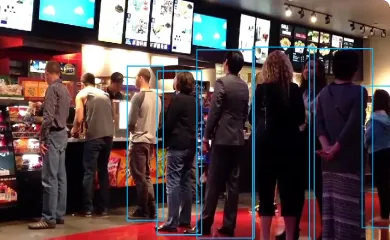
Computer vision analytics provide organizations with a clearer understanding of audience behavior. By analyzing demographics, dwell time, engagement levels, and footfall patterns, businesses gain actionable insights about what content performs well and how people interact with their environment.
These insights help teams make better decisions around content planning, screen placement, store layout, and customer flow management. Importantly, modern computer vision solutions—like Navori’s software—operate in full compliance with global privacy regulations by using anonymized data that is never stored or personally identifiable.
Interactive Experiences Powered by AI
AI-assisted interactivity is another major advancement shaping next-generation digital signage. Voice interfaces, gesture recognition, chat-driven navigation, and multi-touch experiences create more intuitive and engaging interactions. Instead of tapping menus or browsing manually, users can speak naturally or gesture to access information.
These features support environments like shopping malls, airports, campuses, and corporate lobbies—places where wayfinding, customer support, and information delivery are essential.
Improved Operational Efficiency Through Automation
AI significantly improves operational efficiency by enabling automated scheduling, predictive maintenance, and remote diagnostics. With intelligent monitoring, the system can detect performance issues, optimize playback, and automatically reboot or adjust hardware settings without human intervention.
For large networks with hundreds or thousands of screens, this automation reduces labor costs and minimizes downtime. It also provides IT teams with timely alerts and recommended actions, ensuring the signage network runs at peak performance.
How Navori Integrates AI into Digital Signage Ecosystems
Navori plays a critical role in bringing these AI capabilities to life. Through the Navori software, organizations benefit from advanced analytics, while our software empowers teams with automated content delivery and intelligent playback rules. These systems work together to create a fully integrated ecosystem where content, data, and analytics flow seamlessly.
Navori’s commitment to innovation ensures businesses can deliver personalized communication at scale, understand their audiences more deeply, and streamline operations through AI-driven automation. As AI continues to evolve, Navori remains at the forefront, supporting customers with tools that enhance engagement, efficiency, and strategic decision-making.
Industry Use Cases for AI-Powered Digital Signage
Retail
AI-driven product recommendations, queue monitoring, dynamic pricing, and personalized promotions help retailers boost conversions and improve the in-store experience.
Quick-Service Restaurants (QSRs)
AI optimizes menu boards based on time of day, weather, or restaurant traffic. It can automatically highlight fast-moving items or promote meals that match customer profiles.
Corporate Communications
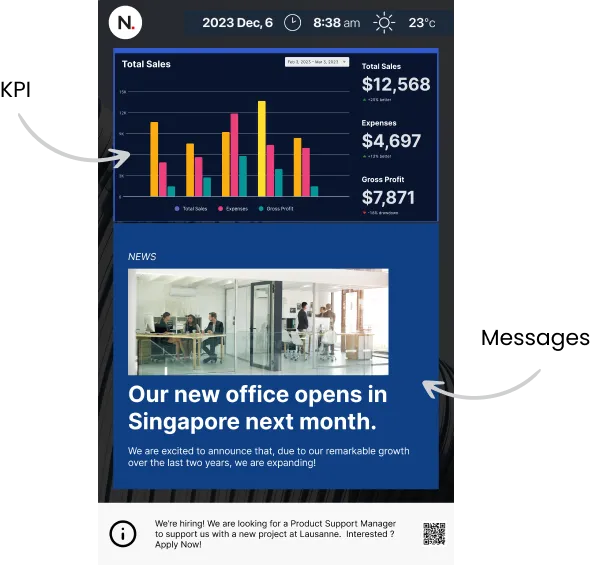
Employee-facing displays can provide real-time updates, relevant news, custom dashboards, and AI-generated alerts across large corporate campuses.
Transportation
Airports and transit hubs benefit from dynamic wayfinding, real-time advisory updates, interactive kiosks, and multilingual AI avatars.
Hospitality
Hotels can provide automated check-in assistance, smart concierge services, and AI-powered lobby experiences that elevate guest satisfaction.
The Future of AI in Digital Signage
The next era of digital signage will be defined by even deeper AI integration. Emotional analytics may allow screens to adjust messaging based on user sentiment, while advances in 3D rendering are paving the way for hyper-realistic avatars that act as brand ambassadors.
We’ll also see the rise of multi-sensory experiences combining visuals, audio, scent, and environmental cues for immersive engagement. AI-driven omnichannel platforms will unify content across mobile devices, kiosks, websites, and in-store displays.
As autonomous retail environments become more common, AI-powered digital signage will support cashierless checkout, dynamic pricing, and real-time product recommendations. These emerging technologies continue to push the boundaries of what digital signage can accomplish.
Final Thoughts: AI Is Defining the Next Generation of Digital Signage
Artificial intelligence is no longer a future concept—it is the foundation of modern digital signage. From personalization and automation to analytics and interactivity, AI-powered digital signage delivers better engagement, improved customer experiences, and stronger operational efficiency. Organizations that embrace AI today will lead the next generation of digital communication, and platforms like Navori are helping make this transformation possible.

